Menu
Stamped vs Plain Concrete Patio Cost in North Miami
Stamped Concrete Patio North Miami
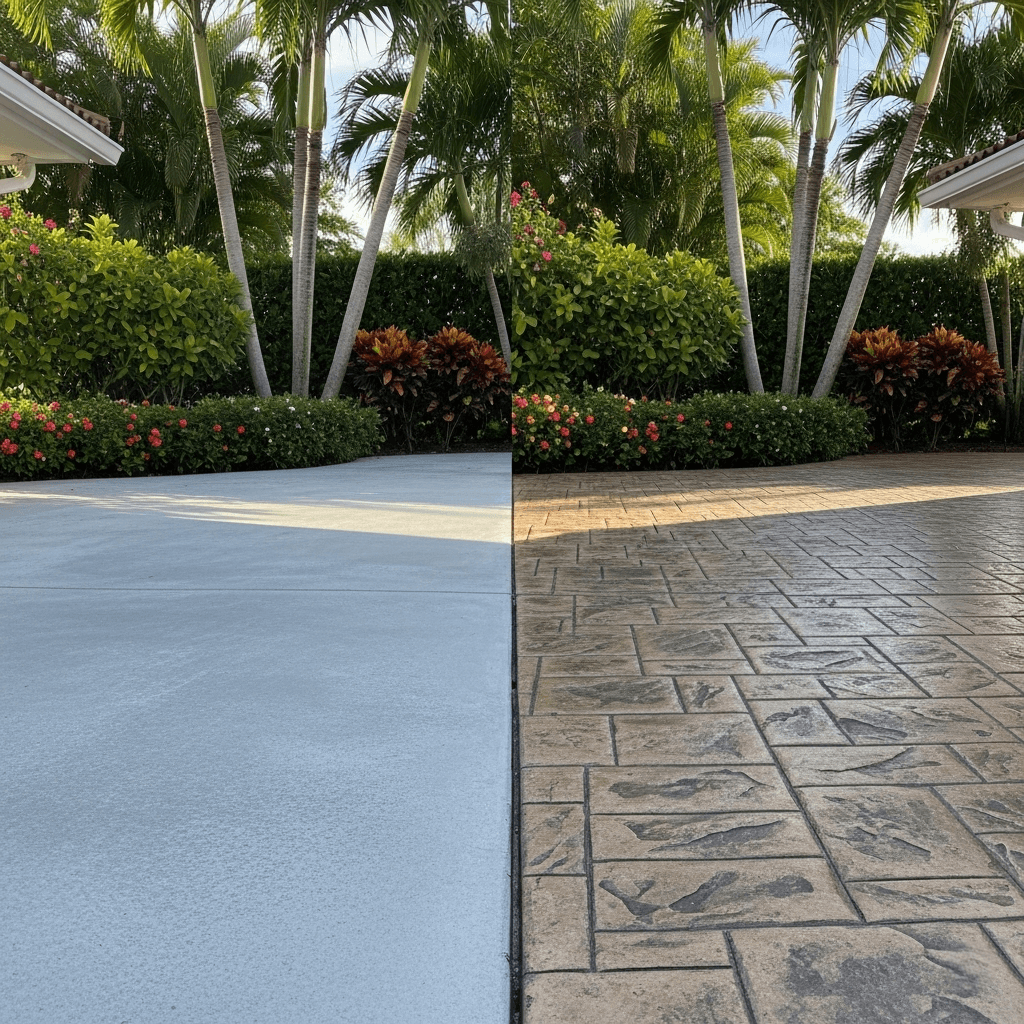
In terms of project budgets in North Miami, choosing between a stamped concrete patio or a plain concrete installation depends on the significant cost differences between the two. Stamped concrete is generally 40-60% higher in cost than plain concrete installations due to additional materials, increased labor costs associated with specialized craftsmanship, and the added complexity associated with custom designs. As well as additional costs from contractors due to local demand for services near high-demand areas such as Oleta River State Park and Biscayne Bay, fluctuations in material prices also occur throughout the year based on local market conditions. By effectively planning, homeowners can evaluate whether the aesthetic benefits provided by decorative enhancements are worth the additional expense to achieve their desired results for their outdoor living space. The knowledge of these financial factors provides homeowners with the opportunity to make informed choices that meet both their functional needs and their budgetary constraints for their properties located in North Miami.
Plain Concrete Patio Costs in North Miami
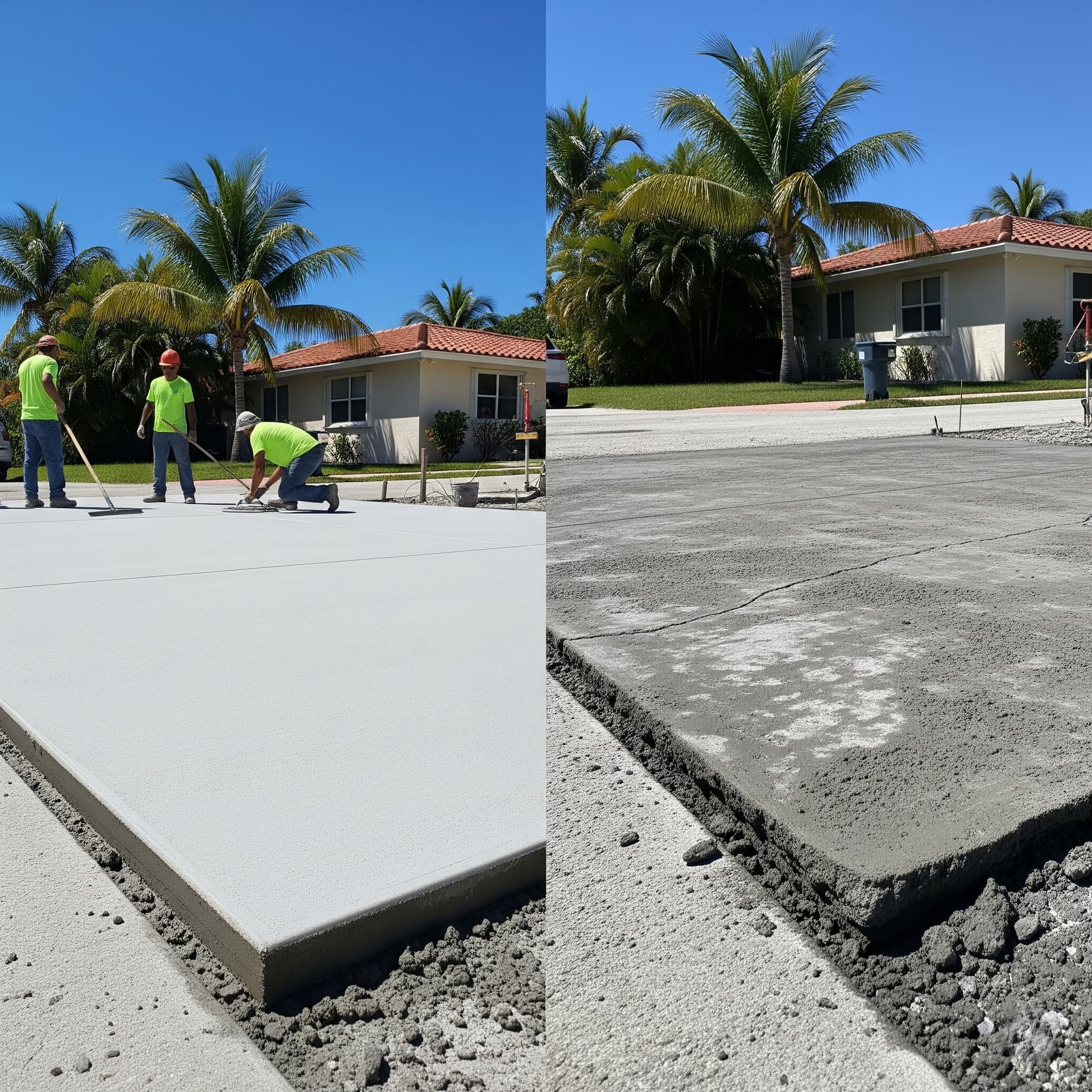
The standard prices for installing plain concrete patios in North Miami are typically in the range of $5 to $10 per square foot for standard installations. The prices quoted above for standard 4-inch-thick concrete and site preparation (for a basic job) include a smooth or broom-finish surface. For example, a typical 12 x 20-foot patio (240 sq ft) will have an estimated cost of $1,200 to $2,400 for plain concrete installation, which is the least expensive method for providing functional space outside the house.
Factors affecting the cost of plain concrete in North Miami include, but are not limited to: local government permit fees (Miami-Dade County permit fees are in the range of $150 to $400); site access difficulties in well-established neighborhoods such as Keystone Point; and seasonal demand variations.
Adding a basic wire mesh reinforcement to a plain concrete installation typically adds another $0.50 to $1.00 per square foot to the cost of the installation. However, this addition significantly improves the resistance to cracking of the plain concrete in North Miami’s climate. These foundation prices serve as a reference point for comparing decorative concrete alternatives.
Decorative Options for Plain Concrete
As mentioned above, standard concrete is durable and has very low maintenance requirements and is typically expected to last 25–30 years if properly cared for. Standard finishes for plain concrete include smooth-trowelled surfaces and broom-textured finishes for slip-resistance during the numerous rain events in Florida. As a result, plain concrete is a very unattractive decorative option and may appear institutional compared to other decorative concrete alternatives found in neighborhoods such as Sans Souci Estates.
For plain concrete, there are limited color options available unless integral coloring is added to the mix, which increases the cost of the installation by $1–3 per square foot. Surface treatments such as acid washing or light grinding can increase the attractiveness of plain concrete, but would not come close to the attractive qualities of decorative concrete at the same cost level.
Stamped Concrete Patio Pricing
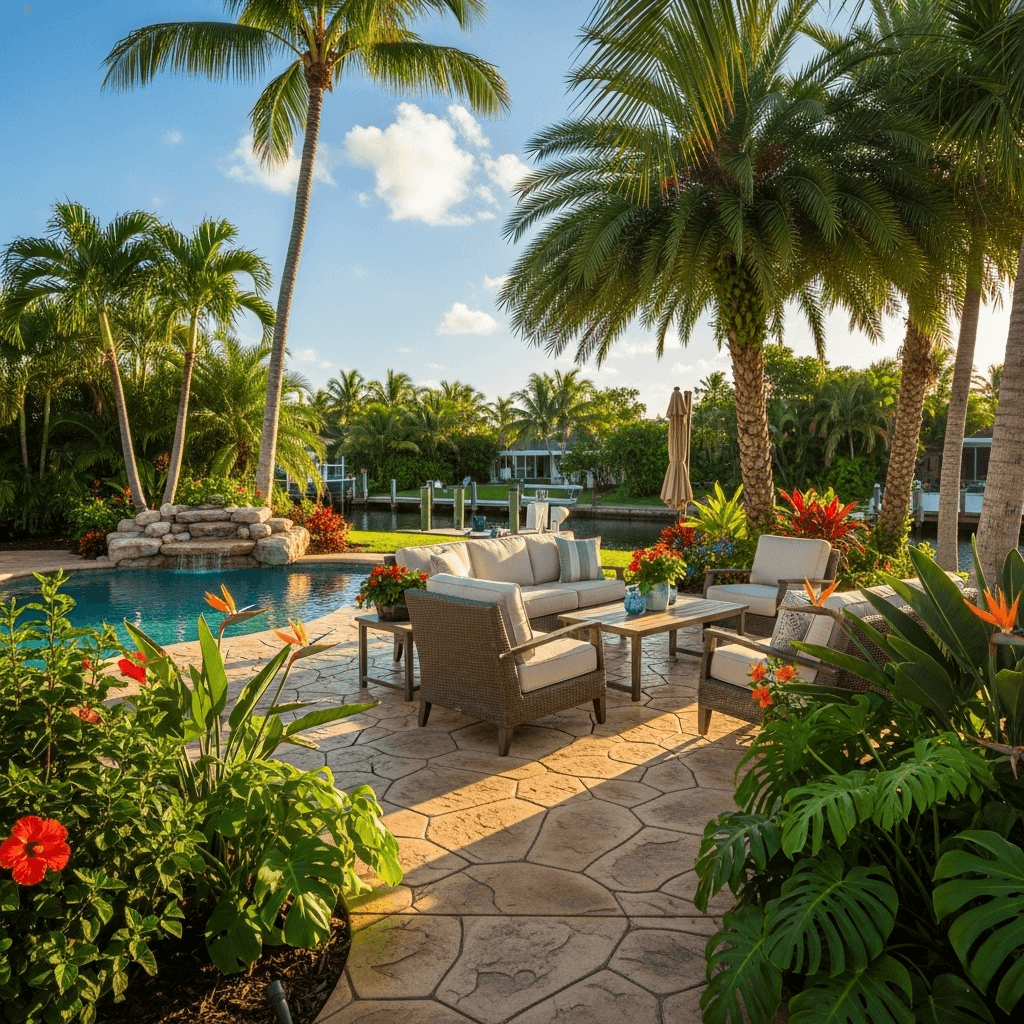
Stamped concrete patio installations in North Miami range from $10 to $18 per square foot for reinforced concrete and represent a premium of roughly 100 percent to 180 percent over plain concrete alternatives. More complex designs, multiple colors, and hand-applied detail can increase the cost of stamped concrete installations up to $20–25 per square foot for high-end installations. A comparable 12 x 20-foot stamped concrete patio could cost in the range of $2,400 to $4,320, clearly demonstrating the large premium that homeowners must be willing to pay for decorative concrete.
High-end stamped concrete projects utilizing multiple patterns, accent borders, and custom coloring can also reach $25–30 per square foot in affluent neighborhoods surrounding the Museum of Contemporary Art area and can compete with the appearance of natural stone in terms of aesthetic appeal while retaining all the practicality of concrete for the challenging climate conditions of South Florida.
Components of Stamped Concrete Pricing
Materials used in the creation of stamped concrete, such as specialized release agents, color hardeners, and sealing compounds, can add $2–4 per square foot to the base cost of plain concrete and materials. In addition to the materials used in creating a stamped concrete installation, professional-grade stamping tools and pattern mats are costly and reflect a significant portion of the contractor’s overhead, and therefore, the cost of labor for stamped concrete. Skilled craftsmen who can execute complex patterns also command a premium rate of pay compared to those with less technical skill who perform basic finishing work on standard concrete.
Additional layers of color used in creating realistic stone or brick appearances require additional materials and additional time to complete each layer, and each additional layer of color can add $1–2 per square foot to the cost of the installation. Hand-applied accent colors command the highest premium for creating custom artistic effects.
Comparison of Costs Between Decorative and Plain Concrete
A direct comparison of the costs of decorative concrete and plain concrete indicates that decorative concrete typically costs 40–60 percent more than plain concrete for the same square footage. A 300-square-foot patio can be installed for $1,500 to $3,000 using plain concrete and for $3,000 to $5,400 using decorative concrete. Therefore, the $1,500 to $2,400 premium charged for decorative concrete represents the amount of money homeowners are paying for enhanced aesthetic appeal and the potential to increase the value of their property.
Homeowners who wish to take advantage of decorative concrete’s enhanced aesthetic appeal while minimizing their costs can utilize various “value engineering” methods, including using simpler designs, applying only one color, and/or applying stamped borders to a plain center field. While these methods do limit the decorative appeal of a homeowner’s patio, they do enable homeowners to achieve decorative elements at a lower cost than traditional decorative concrete.
Pricing Variance Based Upon Size
Larger patios often obtain a better price per square foot for both plain and decorative concrete due to the economies of scale present with both types of installations. On the other hand, the labor-intensive nature of decorative concrete means that smaller projects will incur a disproportionately higher cost than plain concrete alternatives. Homeowners should be aware of the minimum project charges incurred for small decorative work, as these minimum project charges will be a greater factor in determining the costs for small decorative work than in determining the costs for larger decorative work.
In general, projects over 500 square feet will incur fewer price differences between plain and decorative concrete as the fixed costs are spread out over larger areas. Smaller projects (less than 200 square feet) will incur the greatest price differences between plain and decorative concrete due to the need to establish a work site and the minimum labor costs involved in completing the work.
Price Impact of Design Complexity
Simple stamped patterns, such as basic slate or brick designs, will increase the cost of the installation slightly over plain concrete, typically 30–40%. More complex patterns, including multiple textures, curved borders, or medallions, will double the cost of the installation of plain concrete. The most expensive patterns, including custom logos, intricate geometric designs, or hand-carved details, will be the most expensive and will represent the highest price tier for decorative concrete installations.
Complex patterns will require more time to install and require more skillful craftsmanship than simple patterns, and will therefore increase the cost of the installation. Neighborhoods surrounding Enchanted Forest and Elaine Gordon Park are common locations for elaborate designs that support the premium pricing of decorative concrete through its enhanced visual appeal.
Options Available for Color and Finish
Adding integral coloring to plain or decorative concrete will increase the cost of the installation by $1–3 per square foot, depending upon the number of colors used and the location of the project. Stamped concrete allows for a variety of advanced coloring techniques to create a realistic appearance, including the use of color hardeners, antiquing agents, and highlight stains. Advanced coloring techniques can increase the cost of the installation by $3–6 per square foot, but provide a highly realistic appearance that cannot be achieved with plain concrete.
The sealing requirements for plain and decorative concrete are also very different. Penetrating sealers used on plain concrete cost $0.50–1.00 per square foot, whereas acrylic sealers used on decorative concrete cost $1.50–3.00 per square foot to protect the colorants and enhance the appearance of the decorative concrete.
Labor and Installation Issues
The installation of decorative concrete requires specialized skills and equipment not typically used by standard concrete finishing crews. As a result, experienced stamping contractors will charge a premium rate for their services compared to standard concrete finishing personnel, who typically charge $40–60 per hour. Additionally, the process of stamping concrete often requires multiple crew members working together to complete the work before the concrete sets, resulting in longer labor times and increased labor costs.
Time is of the essence in the installation of decorative concrete because once the concrete has reached its final set, it is no longer possible to complete the stamping process. This urgent requirement for timely completion may necessitate the use of larger crews or extended workdays, especially in North Miami during the hot summer months when the concrete sets quickly. Delays caused by inclement weather will also adversely affect the installation of decorative concrete since the time required to complete the installation is shorter than for plain concrete.
Requirements for Specialized Skills and Equipment
To successfully install decorative concrete requires extensive experience in the areas of aligning patterns, applying colorants, and preparing the surfacebeforeo the installation of decorative concrete. Decorative concrete specialists, who specialize in decorative concrete and invest heavily in specialized equipment and training, typically charge a premium for their services based on their expertise. These expertise requirements explain why decorative concrete installations can cost significantly more than plain concrete installations.
Additional quality control measures are taken during the installation of decorative concrete, such as sample areas, color-matching procedures, and detailed surface preparation to ensure that a professional installation is provided. While these additional quality control measures will result in a professionally installed product, they will also result in higher costs for the installation of decorative concrete compared to the installation of plain concrete.
Return on Investment and Property Values
The long-term aesthetic appeal of decorative concrete typically provides a greater return on investment in terms of increased property values. Realtors indicate that decorative concrete patios can recoup 60–80 percent of the cost of installation in increased home values, whereas plain concrete typically recovers 40–60 percent of the installation cost. The increased recovery of decorative concrete in increased home values supports the initial cost premium for decorative concrete for many homeowners in North Miami.
Decorative vs. Plain Concrete Maintenance Costs
The maintenance requirements for decorative and plain concrete are very different, with decorative surfaces requiring more frequent sealing and cleaning to maintain appearance. Homeowners with decorative concrete surfaces can expect to spend an additional $200–400 annually on maintenance costs compared to homeowners with plain concrete surfaces, who can be expected to spend an additional $100–200 annually on maintenance costs.
Structural Durability and Life Expectancy
Both decorative and plain concrete will have similar structural life expectancy when properly installed and maintained. Decorative concrete surfaces, however, may exhibit wear patterns more quickly than plain concrete surfaces due to the textured surface of decorative concrete, which accumulates dirt and debris and requires more aggressive cleaning to maintain appearance. Decorative concrete surfaces will also require more frequent touch-ups, with the average cost per square foot being $3–6 compared to the average cost per square foot of $1–3 for plain concrete.
The ultraviolet (UV) resistance of decorative and plain concrete is also different, with decorative concrete surfaces potentially experiencing greater UV degradation and fading, absent the use of high-quality sealing products. Proper sealing and maintenance of decorative concrete surfaces can help to mitigate UV degradation and maintain the appearance of decorative concrete.
Seasonal Demand and Market Conditions
Construction market conditions in North Miami influence both plain and decorative concrete pricing through the availability of contractors and the cost of materials. Both plain and decorative concrete installation costs are typically higher during peak season (October–April) as a result of increased demand and tighter supply conditions. Decorative concrete, however, is more sensitive to seasonal demand variations, and as a result, decorative concrete installation costs can fluctuate dramatically during peak season due to shortages of qualified contractors and weather-related scheduling issues.
Contractor competition in North Miami affects pricing differently for plain versus decorative concrete installations. Competition among contractors for plain concrete installation is generally more intense due to a greater number of contractors competing for contracts to install plain concrete. The scarcity of contractors qualified to install decorative concrete creates less competition among contractors, and therefore, decorative concrete installation costs may be higher than plain concrete installation costs in areas such as Biscayne Highlands, where demand for decorative concrete installation services exceeds the supply of qualified contractors.
Regional Variations in Material Delivery and Labor Costs
Proximity to the coast affects the cost of delivering materials to the job site and the time contractors spend traveling to and from the job site, thereby affecting both plain and stamped concrete installation costs similarly. However, upscale neighborhoods may see higher costs for decorative concrete installation due to clients’ expectations and property values. Conversely, cost-conscious neighborhoods may find limited options for decorative concrete installation, as contractors concentrate on higher-margin markets.
Building Department Requirements and Inspection Processes
Permits and inspections are required for both plain and decorative concrete installations, although complex stamped concrete designs may require additional review time. Building departments’ familiarity with decorative concrete varies, which may affect approval times and associated costs in different areas of North Miami.
Making Your Decision About Whether to Invest in Stamped Concrete
When deciding whether to invest in decorative concrete, homeowners must weigh the short-term costs of stamped concrete against the long-term benefits and their personal preferences. Homeowners who prioritize functionality and are constrained by budget will find plain concrete to offer the best value for basic outdoor living needs. Homeowners who prioritize enhancing the aesthetic appeal of their homes and increasing the value of their properties will likely find the premium costs of decorative concrete to be justified.
Budget allocation strategies can assist homeowners in achieving decorative elements within their financial constraints. Examples of budget allocation strategies include: installing decorative borders with plain center fields; implementing staged installations; or installing overlays that allow homeowners to upgrade their patios at a later date, spreading the costs of decorative concrete over time while still allowing homeowners to retain the flexibility to make upgrades in the future.
When considering the costs of decorative concrete, homeowners should carefully evaluate their own specific property needs, the characteristics of their neighborhood, and their long-term plans to determine if the costs of decorative concrete are justified. Both plain and stamped concrete installations will provide decades of service and will provide a functional space for homeowners to enjoy their outdoors. Ultimately, the decision between plain and decorative concrete will depend upon homeowners’ aesthetic preferences and their willingness to invest in enhancements to their properties.
At North Miami Concrete Pros, we strive to educate homeowners regarding the differences in costs between plain and stamped concrete and assist them in selecting the solutions that best fit their budgets and design goals for their outdoor living spaces.
LATEST POSTS