
Menu
Cost vs. Quality: Concrete Flatwork Price Drivers in North Miami
Concrete Flatwork North Miami
Understanding the relationship between the cost of concrete flatwork and the quality of concrete flatwork will help North Miami property owners make smart investments when it comes to balancing the cost of a project with its expected long-term performance. The average professional cost for concrete flatwork is $6 to $15 per sq ft. The cost of professional concrete flatwork can vary based on what grade of materials are used, the level of expertise that the workers have, the site conditions of where the job is located, and the finishes that are required for the project. A higher quality standard for a project directly impacts the cost of the project and the long-term value of the project, since using better materials and having better construction practices results in fewer early failures that result in expensive repairs or replacements. By identifying and knowing the major cost-influencing factors that affect each proposal that contractors submit to homeowners, homeowners can compare those proposals effectively to ensure they are getting the best use for their dollars invested in the project in the harsh environment of South Florida.
The Basics of Pricing for Concrete Flatwork
Material costs account for approximately 50% to 60% of the total expense of completing a concrete flatwork project. The cost of concrete varies depending upon grade and type; standard residential-grade concrete is priced at $150.00 per cubic yard, while high-end, specialty concrete blends exceed $200.00 per cubic yard. The remaining 40% to 50% of the total cost of a concrete flatwork project is accounted for in labor. Labor costs vary widely, depending on the experience level of the working crew, the complexity of the project, and the wage rate of the workers in your area.
Standard concrete flatwork installations are priced in the range of $6.00 to $9.00 per square foot for basic applications such as plain driveways, simple patios, etc. However, for projects that have an enhanced application or include decorative finishes, special shapes, or utilize premium materials, the pricing can range from $12.00 to $18.00 per square foot or greater. The primary reason for this increased pricing is due to the material specifications, installation techniques, and finishing quality applied to each project. Each of these elements has a direct correlation to the overall performance of the finished product.
The Material Grade of the Concrete Used Directly Affects Pricing:
Residential concrete strength classifications will dictate the cost of the concrete. A 3,000 psi residential concrete mix is considered sufficient for most applications and serves as the “baseline” for pricing purposes. Concrete strengths ranging from 4,000 to 5,000 psi will cost 15% to 25% more than the 3,000 psi residential concrete mix, but will offer improved durability, resistance to weathering, and settling issues associated with North Miami’s extreme weather conditions, and potential settling issues found in North Miami’s sandy soils.
Adding fibers to the concrete mix will add $0.50 to $1.50 per square foot to the cost of the project and significantly improve the ability of the concrete to withstand cracks and increase its overall structural integrity. Areas located near shopping malls, such as Aventura Mall, are especially prone to excessive wear and tear on the concrete and would greatly benefit from fiber-reinforced concrete products.
Certification of the Concrete Technicians
Certified concrete technicians charge premium wages but produce better-quality installations that justify the higher costs. American Concrete Institute (ACI) certified finishers will ensure that all aspects of the installation process are conducted in accordance with established techniques for mixing, placing, finishing, and curing, thus maximizing the performance and durability of the finished concrete product in extreme weather conditions.
Experienced crews that are familiar with North Miami’s specific soil types and drainage requirements can eliminate many of the common installation mistakes made by inexperienced personnel that ultimately compromise the structural integrity of the finished product. Theycano manage the effects of humidity, temperature fluctuations, and proper curing techniques that are necessary to complete successful concrete installations during South Florida’s extreme summer temperatures and changing seasonal weather patterns.
Benefits of Certifying a Contractor
Certified contractors have met the necessary qualifications to obtain licenses to conduct business in the state, maintain proper insurance coverage, and post required bonds, which protect the property owner from potential liabilities. Furthermore, they are aware of and adhere to the local building codes and regulations, thereby eliminating the risk of costly delays or corrections to the finished project during completion.
A National Ready Mixed Concrete Association (NRMCA) certified contractor demonstrates their commitment to adhering to the latest best practices and continuing education of their employees, therefore allowing them to stay current with new technologies and techniques used in the installation process. This expertise is particularly beneficial for large or complex projects near popular destinations, such as the Museum of Contemporary Art, where aesthetics are crucial and precise execution is demanded.
Preparation of the Site and Base Materials
Preparing the site and installing the base materials before pouring the concrete can cost $2 to $5 per square foot; however, it eliminates the potential for future problems, including settling, cracking, and drainage problems, which can be extremely costly to repair. Excavation, grading, and compaction are essential to creating a stable foundation for the concrete, which is crucial for long-term performance in North Miami’s challenging soil conditions.
Costs Associated with Subbase Materials
The cost of subbase materials is also a major cost factor, with crushed stone being the preferred choice for drainage and stability, as opposed to sand or native soil. High-quality aggregate base courses can cost $1 to $3 per square foot; however, they prevent moisture-related problems and settling issues that commonly occur in coastal areas with high water tables.
Importance of Drainage System Design
Designing and implementing a suitable drainage system for a concrete flatwork project can add $3 to $8 per linear foot to the cost of the project; however, it prevents water damage, which can cause extensive destruction to the concrete flatwork within a few years. Due to the intense rainfall patterns and seasonal flooding associated with North Miami’s location, it is crucial to install a proper drainage system to protect the concrete flatwork from hydrostatic pressure and erosion.
Types of Drainage Systems
Three main types of drainage systems can be installed: French drains, surface slopes, and perimeter drainage systems. While they do require an initial investment, they can prevent costly water-damage repairs that far exceed the cost of installing them. Due to the flooding risks in areas located near parks, such as Greynolds Park, it is highly recommended to implement a comprehensive drainage solution that protects the concrete flatwork from seasonal flooding.
Factors Affecting Finishing Quality and Durability
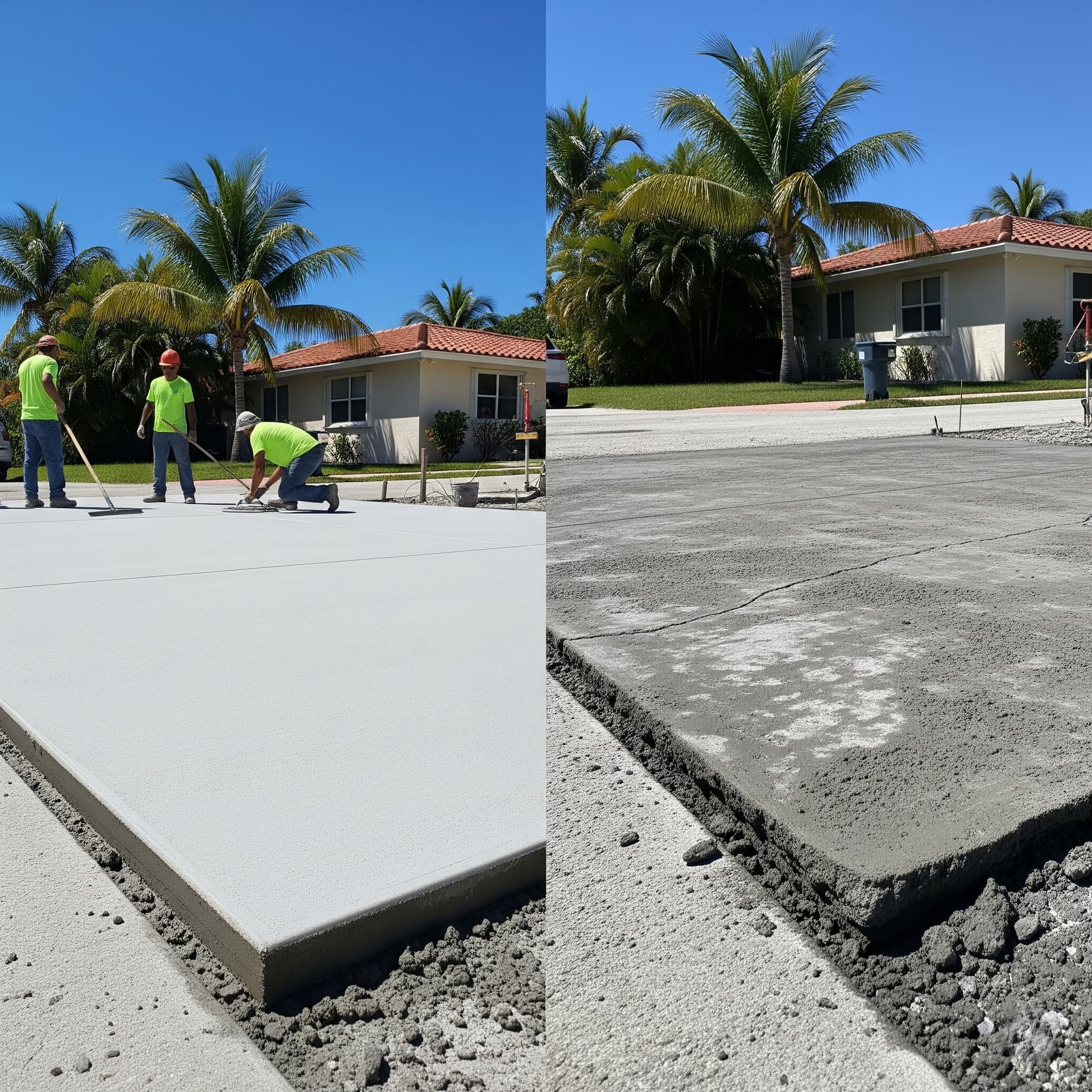
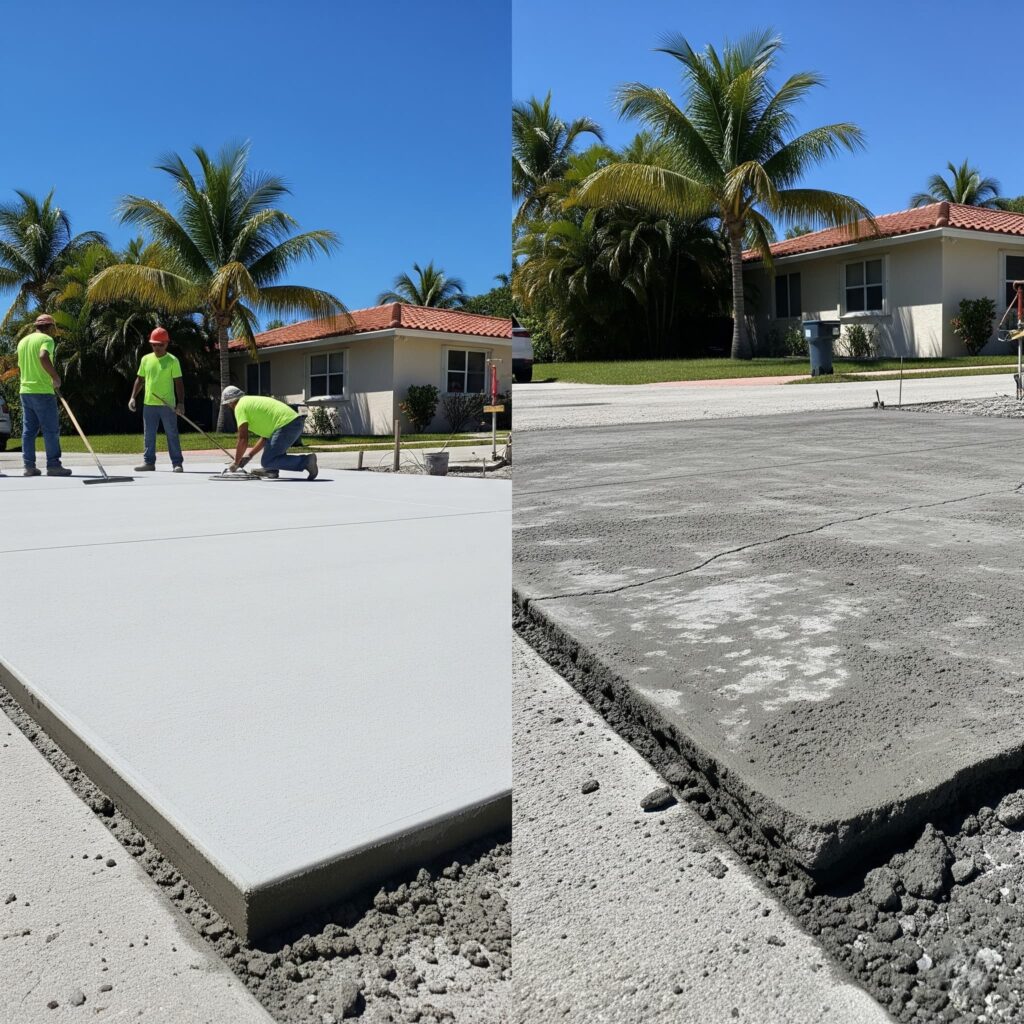
Finishing quality is one of the most important factors affecting the appearance and performance of a concrete flatwork installation. Machine trowel finishing provides superior density and wear resistance compared to hand finishing. Additionally, the cost of operating a machine trowel unit is higher than that of hand finishing units; however, the machine trowel unit produces a uniform finish that resists weathering and maintains its appearance longer.
Curing Methods
Curing is another critical component of a concrete flatwork installation, which affects the development of the concrete’s final properties. Proper curing methods are relatively inexpensive to implement; however, they significantly affect the development of the concrete’s strength and durability. Professional contractors use a variety of curing methods, including curing compounds, plastic sheeting, and water curing, to optimize the strength gain during the critical early stage of development.
Protection and Sealing Products
Applying a quality sealer to a concrete flatwork installation can cost $0.50 to $2.00 per square foot; however, it protects the concrete from moisture penetration, UV damage, and chemical attacks that are common in South Florida. Penetrating sealers are generally more effective and durable than topical coatings, which require frequent reapplications.
Protective Measures Against UV Damage
Due to the intense sunlight in North Miami, UV-resistant sealers are a must for any concrete flatwork installation. UV-resistant sealers protect the concrete from surface degradation and color fading, which compromises both the appearance and structural integrity of the concrete.
Value of Long-Term Performance
While quality concrete flatwork installations can cost more initially than inferior-quality installations, they typically provide 25 to 50 years of reliable service with little to no maintenance. Conversely, inferior-quality installations typically require repairs or replacement within 10 to 15 years, resulting in significantly higher lifetime costs.
Impact on Property Values
Quality concrete flatwork installations will typically add to the overall value of a property and enhance its curb appeal. In areas where there is a high demand for prestige homes, such as along Biscayne Bay, high-quality concrete flatwork installations are a necessity for maintaining the appearance and functionality of the home.
Maintenance Costs
In addition to the initial cost of the installation, there are several additional costs associated with maintaining a concrete flatwork installation. High-quality installations require minimal maintenance, primarily consisting of periodic cleaning and resealing of the concrete surface every 3 to 5 years for $1 to $3 per square foot. Conversely, poor-quality installations require frequent repairs to address issues such as cracks, unevenness, and surface damage. In extreme cases, these repairs can exceed the cost of the original installation multiple times over.
Benefits of Preventative Maintenance Programs
Implementing preventative maintenance programs for high-quality concrete flatwork installations allows homeowners to plan for future maintenance expenses, as well as schedule the maintenance to minimize disruption to daily activities. Conversely, poor-quality installations create uncertainty regarding when failures will occur and require emergency repairs to prevent further damage, which can disrupt budgets and property usage.
Specialized Requirements for Climate Conditions
As previously mentioned, the subtropical climate of North Miami presents unique challenges for concrete flatwork installations, requiring specialized formulations and installation techniques to accommodate the high humidity, extreme UV exposure, and seasonal temperature variations. Without adapting to these local environmental conditions, standard Northern concrete mixes will typically fail prematurely in the South Florida climate.
Specialized Protective Measures for Coastal Locations
Properties located in proximity to the coast, such as those near Biscayne Bay, require specialized protective measures to prevent damage caused by salt-air exposure and corrosion of reinforcing steel, which are common in coastal areas with high water tables. While these specialized protective measures add to the initial cost of the installation, they provide long-term protection against damage caused by chloride intrusion and subsequent degradation of the concrete.
Considerations When Scheduling Projects During Hurricane Season
Scheduling concrete flatwork projects during hurricane season can add costs and reduce quality due to premium prices charged for expediting work before hurricanes and the limited number of qualified contractors available to perform work during peak construction seasons. Additionally, scheduling projects during optimal weather windows will not only reduce costs but also allow for ideal curing conditions to achieve maximum performance from the concrete.
Considerations When Working in Summer Heat
When performing concrete flatwork installations during the hot summer months, contractors must employ specialized techniques and scheduling to ensure that the concrete is placed and cured properly. While these techniques may add to the initial cost of the installation, they are essential to producing high-quality results.
Evaluating Contractor Proposals
When evaluating contractor proposals for a concrete flatwork project, property owners should look for detailed specifications regarding the type of concrete mix design, reinforcement details, finishing techniques, and warranty terms provided by each contractor. By comparing the specifications included in each proposal, property owners can determine which contractor is offering the best-quality product at the lowest price.
Obtaining References from Recent Projects
Another way to evaluate a contractor’s quality and performance is to ask for references from recent projects. Checking the contractor’s past performance and quality standards will give you insight into whether the contractor is capable of producing quality results. Additionally, visiting recently completed installations will give you first-hand knowledge of the quality of the finished product and its durability, which will help you justify the premium pricing offered by top-rated contractors.
Potential Red Flags in Low-Cost Proposals
Low-cost proposals can potentially contain red flags that indicate the contractor will cut corners on either materials, labor, or the installation process to save money. Some examples of red flags include incomplete information regarding the specifications of the concrete, lack of detail regarding reinforcement, lack of detail regarding preparation of the site, and lack of detail regarding the curing of the concrete after it has been placed.
Lack of Required Licenses and Insurance
Additionally, if the contractor does not possess the required licenses, insurance, and/or local experience, it poses a significant risk to the homeowner and may ultimately result in a loss of money invested in the project. High-quality work requires a significant investment in materials, skilled labor, and professional supervision, and reducing any of these costs will likely result in a compromised outcome.
How to Make Informed Purchasing Decisions
To make informed purchasing decisions, you must understand how different factors will affect both the initial costs of a concrete flatwork project and the long-term value of the project in the unique environment of North Miami. The initial cost of a concrete flatwork project is only part of the equation, as the long-term performance and value of the project must also be taken into consideration. High-quality concrete flatwork installations cost more initially, but they provide long-term performance, minimal maintenance, and improved property values that will justify premium pricing for the remainder of the project lifecycle. Therefore, smart investing decisions should focus on the total cost of ownership rather than just the initial cost of the installation. Quality concrete flatwork installations can provide decades of dependable service when properly installed by experienced professionals. At North Miami Concrete Pros, we are committed to delivering the highest-quality concrete flatwork installations using only the best materials and our team of expertly trained professionals. We have a strong commitment to quality, and we take pride in knowing that our work stands the test of time.
LATEST POSTS