
Menu
Concrete Patio Design in South Florida: Weather-Proof Tips
Concrete Patio North Miami
A durable, long-lasting concrete patio for your home in South Florida will require a high degree of planning to account for South Florida’s climate conditions. The extreme weather found in South Florida, from hurricane-force winds to heavy rainfall, intense UV radiation to extreme humidity, tests outdoor structures throughout the entire year. In order to create smart designs, you must include proper drainage, reinforcements, and weather-resistant materials that are able to function well in tropical conditions. With professional installation methods, your investment should be able to last for decades in South Florida’s demanding weather conditions. By understanding the local environment, homeowners can make informed decisions that protect their outdoor living space as well as increase both the functionality and the value of their property.
Understanding South Florida’s Climate Issues
South Florida’s warm climate causes multiple stressors that impact how durable and long-lasting a concrete patio will be. Temperatures that range from 70°F to 95°F, which can vary widely depending on the time of day, cause the concrete to expand and contract constantly due to thermal shock. If there are no expansion joints in place, this can cause cracking. In addition to the thermal cycling, South Florida experiences an average of 60 inches of rainfall each year, and much of that occurs during a few short days in the summer months.
To keep the patio from developing puddles that can cause damage and surface deterioration, you need to have good drainage. The winds caused by hurricanes in South Florida can reach speeds of greater than 74 mph and gusts of more than 150 mph. When these winds hit patio furniture and other loose items on your patio, they can become very dangerous projectiles. Concrete construction can withstand winds of 250 mph when it is properly designed and reinforced. Also, the salt air associated with being near the coast can corrode metal reinforcement in concrete, and the UV light associated with sunlight will cause the surface of the concrete to degrade and the colors to fade over time.
Humidity and Moisture Management
In South Florida, the humidity level in the atmosphere exceeds 70% a great deal of the time, causing ideal conditions for the development of mold and the degradation of many materials. The combination of high humidity and salt-laden air that is commonly found in coastal Florida increases the amount of wear that concrete patios will endure, as moisture seeps into the pores of the concrete. As moisture enters the pores of the concrete, it causes freeze-thaw cycle erosion of the material and weakens its structure.
A good way to address the humidity and moisture issues in South Florida is to have a good ventilation design in place and to install some type of moisture barrier to protect the concrete patio. Because concrete has a naturally porous structure, it absorbs the atmospheric moisture around it and expands during humid periods and contracts during dry periods. Due to the constant expansion and contraction of the concrete, it is very important to strategically place control joints and flexible sealants that will allow for the thermal expansion and contraction of the concrete while still keeping the elements out of the patio.
Drainage Design Principles
A good drainage slope for concrete should be at least a quarter-inch drop for every foot of length. This slope allows the water to drain off quickly while still providing a comfortable walking surface and maintaining a visually appealing surface. By using good drainage design principles, you can ensure that the water does not accumulate on your patio, and therefore you do not compromise the structural integrity of the patio and create a hazardous condition.
Poor drainage of your patio is not only going to ruin your outdoor activities, but it can also cause water to leak into the basement of your house if the water collects next to your house. Professional contractors build drainage into multiple components of your patio installation, such as surface grading, built-in channels, and permeable materials, to handle the heavy amounts of rainfall experienced in South Florida.
Advanced Drainage Options
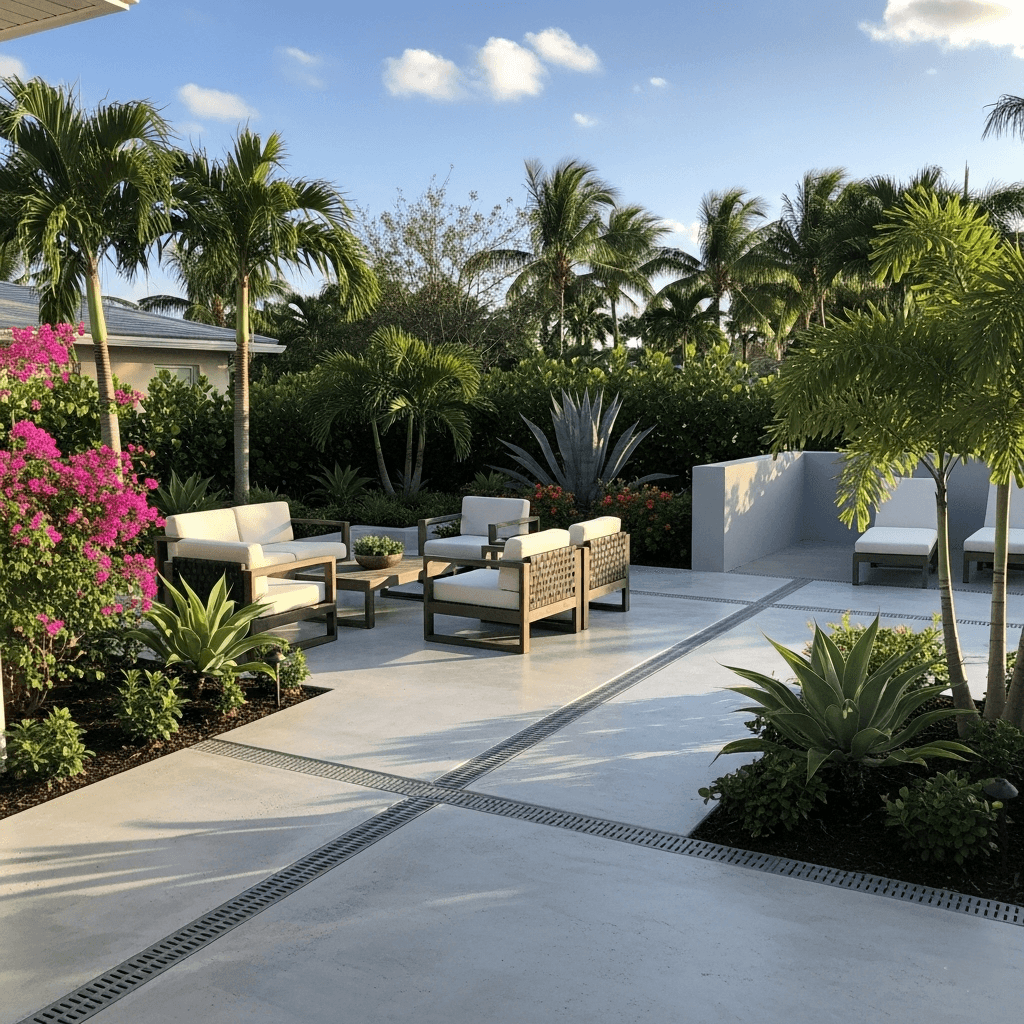
Flush-mounted channel drains, which are part of the patio surface itself, allow for the water to be drained quickly and efficiently while minimizing trip hazards. They direct the water away from your home and maintain a clean line. Slot drains with openings as small as 0.50 inches eliminate the need for grates and do not have raised edges that can be a hazard for people to trip over.
Permeable concrete options allow water to infiltrate the surface of the patio itself and thereby reduce the volume of runoff water and support sustainable stormwater management practices. Permeable options would be best suited for homes that have little to no area for drainage and are looking to comply with local regulations.
Hurricane Wind Resistant Reinforcement Strategies
While 4-inch thick concrete is sufficient for most residential applications, the increased risk of hurricanes calls for increased thickness and strategic placement of reinforcement to provide tensile strength to prevent crack propagation during extreme weather conditions. The placement of steel rebar grids at mid-depth of the slab provides additional tensile strength that helps to prevent crack propagation during extreme weather conditions. When specifying reinforcement for outdoor concrete installations that are subject to the same environmental stresses as structural walls, you should consider both static loads and dynamic forces created by wind uplift.
Insulated Concrete Forms (ICFs) are resistant to water, high-speed winds, and debris, and have performed well in several major hurricanes. While ICFs are used primarily for structural wall applications, the lessons learned from these applications are applied to reinforcement strategies for outdoor concrete installations.
Anchor and Connection Detailing
To attach a concrete patio to an adjacent structure, you must mechanically fasten them together with anchors and properly detail the control joints to allow for thermal expansion and contraction. An expansion joint will allow for thermal expansion and contraction while maintaining the structural integrity of the patio during extreme temperature fluctuations. Professional contractors detail all isolation joints where the patio connects to a foundation to prevent stress transfer and subsequent cracking.
By ensuring that the reinforcement is continuous through the critical connection points, the load transfer path remains unbroken during extreme weather conditions and thus prevents failure at the vulnerable transition between the two construction materials and structural elements.
Tropical Condition Material Selection
When selecting materials for a concrete patio in South Florida, you should select materials that are specifically formulated to perform in the tropical conditions of South Florida. These materials will typically include admixtures that will improve the workability of the concrete in the hot weather conditions and improve the final strength characteristics of the concrete. The admixtures will also create microscopic voids in the concrete that will accommodate freeze/thaw cycles; although less critical in South Florida than in cooler climates, these voids will also provide advantages during the rapid temperature swings that occur during the summer thunderstorm season.
Fibers added to the concrete mix before pouring will provide multi-directional strength enhancements and crack control. Both synthetic fibers and steel fibers are available and offer the advantage of resisting corrosion. Steel fibers also provide superior tensile strength. The combination of fibers and traditional rebar placement will provide comprehensive protection against the various environmental stresses that the patio will experience.
Finishing Options and Color
Light-colored finishing options will reflect heat and reduce the surface temperature of the patio, making it more comfortable to walk on and sit on during the hot summer months. All integral coloring systems will provide superior color retention versus surface-applied stains, which can deteriorate rapidly due to the constant UV exposure. A textured finish option will provide additional traction to the surface and add visual interest to the patio design.
An exposed aggregate finish will display the decorative stone contained in the concrete and provide additional traction to the surface during wet conditions. Exposed aggregate finishes will also resist wear and retain their appearance even after heavy use and prolonged exposure to the elements that are characteristic of outdoor living areas.
UV Protection and Surface Treatment
UV rays from the sun are the primary source of fading concrete and, combined with layers of dirt, can make concrete look dull and dirty over time as the dirt seeps deeper into the pores of the porous surface. A professional-grade sealer will protect the surface of the concrete from UV damage while increasing the durability of the surface and making maintenance easier.
There are two types of sealers: penetrating sealers and film-forming sealers. Penetrating sealers will protect the concrete from within while allowing the surface to breathe and maintain its natural appearance. Film-forming sealers will create a barrier on the surface of the concrete that will repel water and stains but will require more frequent reapplication in high-traffic areas. The type of sealer selected will depend upon the desired appearance, the maintenance preferences, and the anticipated use of the patio.
Maintenance and Resealing Schedules
Due to the high intensity of the climate in South Florida, the maintenance required for concrete patios is more frequent than in moderate climates. Annual inspections will identify early signs of wear or damage that can develop into larger problems. Regular re-sealing of the patio every 2–3 years will maintain the protective qualities of the sealer and extend the life of the patio.
Prompt attention to small cracks will prevent the infiltration of water into the cracks and the resultant damage to the patio during heavy rain periods. Regular cleaning of the patio surface will remove salt deposits and organic growth that can damage the surface of the patio over time.
Control Joint Design and Sealing
Control joints will allow for the thermal expansion and contraction of the concrete and help to reduce the number of random cracks that form in the concrete. Strategically placing control joints approximately every 8–10 feet will control where the cracks occur and maintain the structural continuity of the patio. Calculating the correct width and depth of the control joints will take into account the anticipated temperature ranges and the characteristics of the concrete mix.
Flexible concrete caulk will protect the control joints from water and weed intrusion while allowing the concrete to move as it expands and contracts. High-quality sealants will continue to function under extreme temperatures and UV exposure that are common in South Florida.
Regular inspections of the sealants and replacing the sealants when needed will prevent water from entering the control joints and subsequently damaging the structural integrity of the patio.
Advanced Joint System Options
Self-leveling sealants provide a professional appearance and will effectively accommodate the movement of the concrete in the control joints. Self-leveling sealants will flow into irregularities and cure to create a watertight seal that resists foot and vehicle traffic and cleaning equipment. Non-sag self-leveling sealants will work well for vertical applications and wider control joints.
Pre-formed joint fillers will provide a uniform backing for the sealant application and ensure the proper depth ratio of the joint filling material. Closed-cell foam materials will absorb minimal amounts of water and maintain their compression resistance over their lifespan.
Design Integration with Landscape and Outdoor Living Areas
Concrete patio designs should take into consideration the integration with the surrounding landscape features and outdoor living needs. Proper elevation relationships will ensure that the patio has good drainage and provide a seamless transition to the other outdoor living areas. Mature plant size should be taken into consideration to avoid conflicts with overhead growth and roots in the future.
When integrating utilities such as electrical, plumbing, and gas connections into your patio design, you should plan carefully to ensure that the concrete remains intact and provides the necessary services to support the outdoor living areas.
Equipment and Furniture Considerations
Outdoor furniture that is designed to withstand hurricane winds should be made of materials such as HDPE or aluminum, which are resistant to rust and decay. Concrete surfaces must accommodate furniture anchoring systems that secure the furniture during stormy weather conditions and provide flexibility for normal use.
Embedding anchor points and utility connections into the concrete during the initial construction process provides a significant advantage in strength compared to making modifications to the patio after it has been completed. These modifications will support awnings, outdoor kitchens, and other outdoor equipment that enhance the functionality of the outdoor living areas.
Best Practices for Professional Installation
A successful quality concrete patio installation begins with a thorough evaluation of the job site, including a soil analysis, drainage assessment, and utility location verification. Professional contractors understand the local building codes and permit requirements to ensure compliance with the hurricane resistance standards and flood zone regulations.
The timing of the concrete pour in South Florida is critical. Contractors will plan the pour to occur during favorable weather conditions while remaining flexible for any weather-related delays. Proper curing procedures will protect the freshly poured concrete from rapid moisture loss and extreme temperature fluctuations that can negatively affect the final strength of the concrete.
Quality Control Measures
Professional installations will include comprehensive testing of the concrete strength, verification of the placement of reinforcement, and testing of the functionality of the drainage system to ensure that the finished patio meets the specified design requirements and performance expectations of the demanding South Florida climate.
A thorough inspection will confirm the satisfactory completion of the detailing of the joints, the quality of the finishing work, and compliance with the architectural requirements. Detailed information will be provided to the homeowner regarding routine maintenance requirements, the warranty terms, and the expected service life of the patio.
Performance and Value
Concrete patios that are properly designed will provide decades of reliable service in the challenging South Florida climate. The investment in quality materials and professional installation will pay dividends in reduced maintenance costs and longer service life. These benefits will contribute to the value of your property and create functional outdoor spaces that will stand up to the environmental stresses of the South Florida climate.
Regular maintenance of your patio and adherence to recommended maintenance schedules will maximize the performance and appearance of your patio. Regular inspections of the patio by professionals will identify potential issues before they become large, expensive repairs, protecting your investment in quality outdoor living space.
At North Miami Concrete Pros, we have developed a reputation for designing and installing high-performance concrete patios that thrive in South Florida’s challenging climate. Our expertise in local conditions, materials, and techniques ensures that your outdoor living space will provide years of beauty and functionality despite the environmental stresses of the South Florida climate. We understand the specific needs of coastal living and provide solutions that protect your investment and enhance your enjoyment of your outdoor living space.
LATEST POSTS