Menu
North Miami Concrete Repair: Driveways, Patios & Walkways Tips
Concrete Repair North Miami
Concrete repair or restoration techniques can extend the life expectancy of a driveway, patio, or walkway by keeping your property value high while ensuring the safety of you and your family members. There are many professional repair techniques available, including simply filling in cracks, to completely re-surfacing damaged areas and turning old, weathered surfaces back into a functional and attractive space. By understanding which repair method is best suited for the damage you have experienced, homeowners will be able to make an educated decision as to whether to repair or replace their damaged area. The state of Florida’s climate has its own set of special conditions that require unique methods to address the effects of humidity, rainfall, and thermal cycling on the structure of concrete. Therefore, it is imperative to strategically implement concrete restoration methods before minor damage becomes a serious structural problem requiring complete replacement at an increased cost.
Assessment and Damage Classification
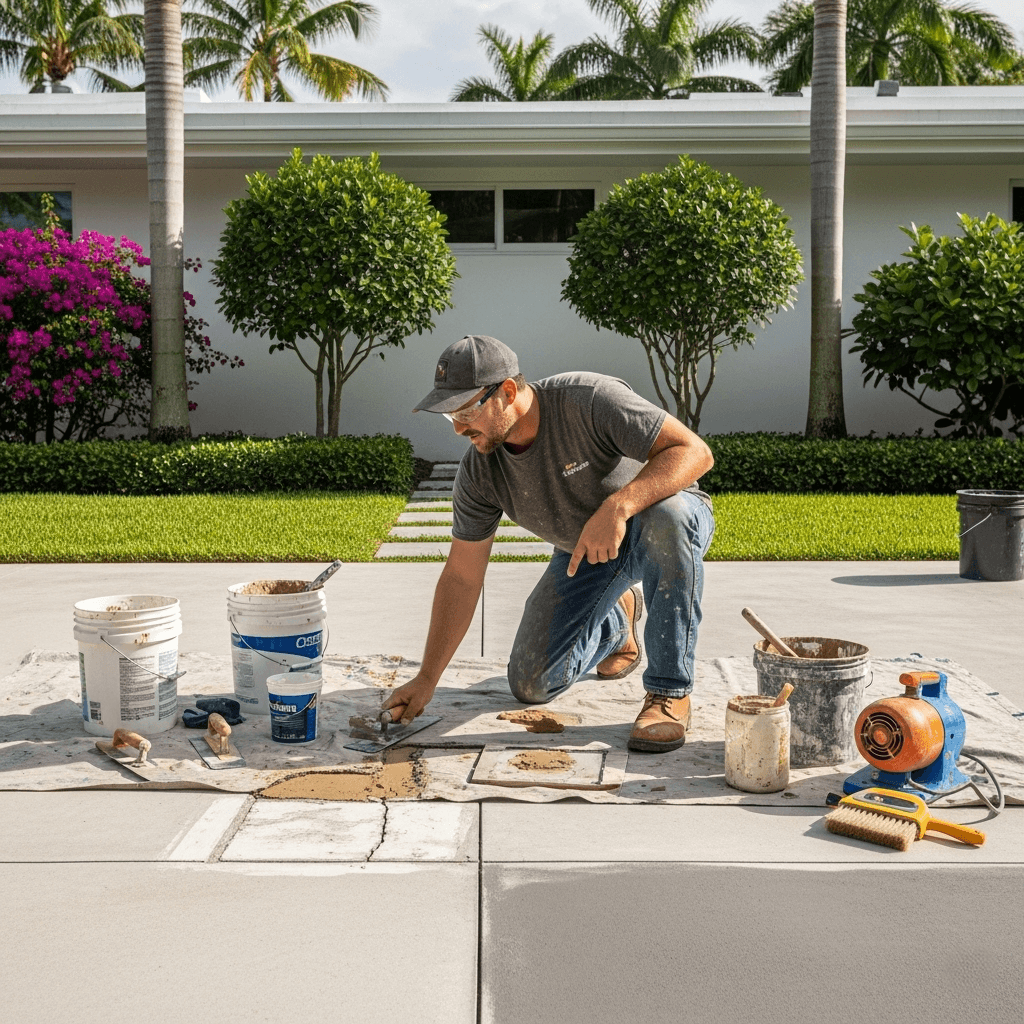
Repairing damaged concrete starts with a thorough evaluation of the extent and causes of the damage. A visual assessment of the surface damage of your driveway, patio, sidewalk, or other damaged concrete will show you the surface damage, such as cracking, scaling, discoloration, and unevenness, which will show you the different kinds of repair needed. A professional assessment will evaluate the size of the crack (width, length, depth), its activity (whether the crack is opening further), and the pattern of the crack to give recommendations for the most effective and efficient method of repair.
The amount of repair needed varies depending on the size of the crack and the condition of the surrounding area. Hairline cracks (less than 1/4 inch) are generally considered a cosmetic issue that can be repaired easily with a surface sealant or filler. Larger cracks (greater than 1/2 inch) generally indicate structural problems that require more extensive repair. Active cracks (cracks that are still moving) require flexible repair materials that can expand and contract with the movement of the concrete. Stable cracks (cracks that have stopped moving) can use rigid materials that will provide structural bonding to the surrounding area.
Environmental Damage Patterns
Miami’s hot, humid environment causes specific damage patterns that help determine what methods of repair should be used. Expansion and contraction caused by temperature changes will cause stress and possibly separate joints, while high humidity will promote efflorescence (salt deposits on the surface of the concrete) and scaling (the loss of aggregate particles). Direct sunlight will also degrade the surface compounds and color treatments on your driveway or patio. Knowing the damage patterns of your environment will allow you to know how long to expect your repair to last.
There are several ways that water can damage your driveway or patio, including freeze/thaw action during the rare cold snap, hydrostatic pressure from poor drainage, and chemical reaction with de-icing salts. Depending on the type of damage, there are corresponding repair methods that will fix the damage at the source and provide an aesthetically pleasing surface.
Repair Methods for Cracks
Depending on the characteristics of the crack, where the crack is located, and the desired performance of the repair material, there are many different types of crack repair materials that can be used. Flexible sealants are the best for exterior applications because they can move with the concrete as it expands and contracts with temperature changes. Rigid fillers are best for interior applications where the crack has stabilized, and structural bonding is required.
Regardless of the material that is selected, proper surface preparation is necessary to ensure the success of the repair. This means thoroughly cleaning the area of debris and ensuring that the surface is properly moistened to ensure that the repair material adheres to the concrete.
Flexible Sealants for Exterior Crack Repair
Flexible sealants, such as polyurethane and modified silicones, are ideal for repairing cracks in exterior concrete driveways and walkways. They provide flexibility to accommodate continued movement in the concrete while preventing the entry of water into the crack that would accelerate damage. To install these sealants, the crack must first be routed to a uniform width and depth, a backer rod must be installed to establish the correct geometry of the joint, and the surface must be tooled to achieve the best possible performance.
Epoxy Injection for Structural Repair
For cracks that need structural repair (to restore the monolithic nature of the concrete), epoxy injection is the preferred repair method. This method is most effective for stable cracks that need structural bonding rather than simply sealing. Epoxy injection requires specialized equipment and materials that ensure that the entire crack is penetrated and that the material cures under a variety of conditions.
Polyurethane Injection for Flexible Cracks
For cracks that are subject to continued movement due to environmental or other factors, polyurethane injection provides a flexible alternative to epoxy that also provides excellent water sealing. During the curing process, polyurethane foams fill any irregularities in the shape of the crack. However, the suitability of this method depends upon the accessibility of the crack and whether the crack is suitable for staged repair.
Patching and Restoring Surfaces
Concrete patching is the repair of localized damage to a concrete surface, such as spalls, holes, and areas of deterioration that compromise the overall integrity of the surface. Successful patching requires the right materials, a prepared surface, and a compatible bonding agent to ensure long-lasting adhesion. New patching compounds cure rapidly and are highly durable if applied correctly.
Vinyl Concrete Patcher (Feather Edge)
Vinyl concrete patchers are ideal for thin-layer repairs and feather-edge applications where a smooth transition is important. They provide strong adhesion and flexibility, allowing them to accept a variety of finish textures.
Portland Cement-Based Patcher (Structural)
Portland Cement-Based patchers provide structural strength for thicker repairs but require more extensive surface preparation and curing protection.
Adhesive Bonding Agent Applications
Bonding agents are used to ensure that the new repair material bonds optimally with the existing concrete. Epoxy-based adhesive bonding agents provide the strongest bond but require precise timing and application techniques. Acrylic adhesive bonding agents are simpler to apply and provide acceptable performance for the majority of residential applications.
Preparing a Surface for Adhesives
Proper surface preparation for adhesives includes removing loose debris, creating the correct surface texture, and maintaining the correct moisture levels. Shot blasting or mechanical scarifying will create the ideal surface for adhesives, and chemical etching will provide sufficient preparation for milder applications. It is also important to time the bonding agent application with the application of the repair material to get the best performance.
Resurfacing and Overlay Systems
Resurfacing your old driveway, patio, or sidewalk with a new thin overlay can transform the look of the surface and restore functionality. Modern overlay systems contain polymers that improve adhesion, durability, and aesthetic options compared to older systems. Resurfacing is especially beneficial for driveways and patios that have extensive surface deterioration.
New decorative overlay systems provide endless design options, including stamped designs, integral colors, and textured finishes. Decorative overlays usually range from 1/4 inch to 1 inch in thickness and can cover minor surface irregularities while providing a new, attractive surface. When professionally installed, resurfacing and overlay systems can provide years of service.
Coatings for Driveway/Patio Surfaces
High-performance epoxy and polyurethane coatings can provide a chemically resistant, low-maintenance, and attractive surface for garages and high-traffic areas. However, they require thorough surface preparation and controlled environmental conditions during application.
Budget-friendly acrylic coatings can be used to restore the appearance of your patio or walkway. Although less durable than epoxy, acrylic coatings are easier to apply and maintain and can provide reasonable longevity for residential applications. Applying multiple layers of coating can increase the performance and aesthetics of your patio or walkway.
Concrete Lifting and Leveling Techniques
Concrete leveling refers to the repair of uneven concrete surfaces resulting from settlement of the soil, erosion, or improper installation. Modern polyurethane foam injection provides a precise method of controlling the lift with minimal disruption to the surrounding area. Concrete leveling is particularly useful for driveways and walkways where replacing the concrete would result in damage to landscaping or nearby structures.
The foam injection method involves drilling holes through the concrete slab and injecting expanding polyurethane into the holes. As the foam cures, it lifts the settled section of the concrete. Typically, foam injection is completed in one day, allowing for immediate use, making it very desirable for homeowners who lead busy lives. Additionally, the lightweight foam will not settle again and will provide long-term stability to the lifted concrete.
Older Methods of Leveling Concrete
Mud-jacking is the older method of leveling concrete using a cement-based slurry that is pumped under the settled concrete. Mud-jacking is suitable for large areas but requires larger holes to be drilled for access and takes much longer to cure than foam injection. Additionally, the heavier mud-jacking material may also contribute to future settling on unstable soils.
Mechanical leveling is another older method of leveling concrete using jacks and supports, often combined with underpinning or soil stabilization. Mechanical leveling is better suited for structural applications where exact elevation control is required. However, mechanical leveling can be expensive and complicated enough that replacing the concrete is often a more practical option for residential applications.
Maintenance Strategies to Extend Concrete Life
Regular maintenance is a great way to extend the life of your concrete and minimize the need for costly repairs. Regular cleaning can remove dirt and chemicals that can damage the surface of your concrete. Promptly sealing cracks can prevent water from entering the cracks and causing further damage.
Annual inspections of your driveway, patio, or sidewalk can identify potential problems before they become serious. Protective sealers can provide a barrier against moisture, chemicals, and the elements that can damage concrete. There are many different types of protective sealers available, each offering a different level of protection, with penetrating sealers preserving the natural appearance of your concrete, while film-forming sealers provide the highest level of protection.
Applying protective sealers regularly will provide optimal protection for your concrete. The frequency of applying protective sealers will depend on how much traffic your driveway receives, the severity of the weather conditions in your area, and the type of protective sealer that was originally applied.
Seasonal Care Needs
Florida’s two distinct wet and dry seasons create different maintenance requirements throughout the year. Preparing your driveway, patio, or sidewalk for the wet season involves cleaning out any blockages in your drainage systems and sealing any cracks to keep water from getting into the cracks and accelerating damage. During the dry season, you should clean the surface of your driveway or patio, apply a protective sealer, and perform any repairs that will benefit from the stable weather conditions.
During hurricane season, you should pay particular attention to your drainage systems and any loose items on your roof that could potentially cause damage during the storm. After a hurricane passes, inspect your home and yard for damage that may need immediate attention while the weather is still good for repairs.
Choosing Materials That Will Work Well Together
When repairing damaged concrete, choosing the right materials for the job is critical to a successful repair. The material you choose should match the intended application, environmental conditions, and compatibility with the existing concrete. Using materials specifically formulated for the local climate will provide the best performance and longest lifespan compared to generic products. Experienced professionals know which materials will work best for the given repair scenario.
Using Polymer-Modified Repair Materials
Polymer-modified repair materials are more flexible and provide better bonding and durability than traditional cement-based products. However, they tend to be more expensive and require specific application techniques. Making educated choices regarding costs and benefits will enable property owners to select materials that meet their needs and expectations.
Ensuring Material Quality
Materials testing and quality control are the keys to ensuring that the repair performs as expected and meets the terms of any warranties. Testing the fresh material will verify that the material was mixed and applied correctly; testing the field-cured material will confirm that it adhered properly and developed the expected early strength. Documenting the materials and methods used will provide proof of the materials and methods used and help with future maintenance and warranty claims.
Factors That Influence Quality
Environmental conditions during application greatly impact the quality of the material and its ultimate durability. Temperature, humidity, and wind can all influence the rate at which the material cures and ultimately affect the finished product. An experienced contractor will monitor and adjust to environmental conditions to produce the best possible repair.
When to Hire a Professional vs. Do It Yourself
While some DIY repairs, such as simple crack sealing or minor patching, can be successfully done with the right materials and techniques, most complex repairs, including those requiring structural repair, significant damage, or decorative finishes, are best left to a professional contractor. The complexity of the repair will help determine the level of skill required to accomplish the repair and the likelihood of a successful outcome.
A professional contractor brings experience, specialized materials, and equipment to the table and will provide a warranty and follow-up service to protect the homeowner’s investment. In most cases, the additional expense of hiring a professional contractor will be minimal compared to the additional costs associated with reworking poorly executed DIY repairs.
Compliance with Safety and Building Codes
Professional contractors are knowledgeable about applicable safety regulations and building codes that govern concrete repair. Compliance ensures that the necessary permits, inspections, and liability protection are obtained, which DIY repairs may not provide. In addition, professional contractors carry liability insurance and bonding that protects property owners from potential claims and damages.
Safety Measures Used in Repair Work
Professional contractors consider safety a priority in all aspects of their repair work. They handle hazardous materials safely, andmanage dust generation and traffic flow during repair work. Professional contractors maintain current safety certifications and equipment that reduce the risk of injury to workers and property residents. These safety considerations are especially important in repairs that involve hazardous materials or difficult-to-access locations.
Repair Options for Outdoor Concrete Surfaces
Concrete repair options for driveways, patios, sidewalks, and other outdoor surfaces are available to property owners to assist them in maintaining and improving the appearance of their outdoor surfaces. By understanding the available options and their respective applications, property owners can make informed decisions that maximize the value and longevity of their repairs. At North Miami Concrete Pros, we offer comprehensive concrete repair services using established repair techniques and quality materials to provide reliable and durable repairs to meet the demands of South Florida’s unique environmental conditions.
LATEST POSTS